Term: King Liang Wu Di
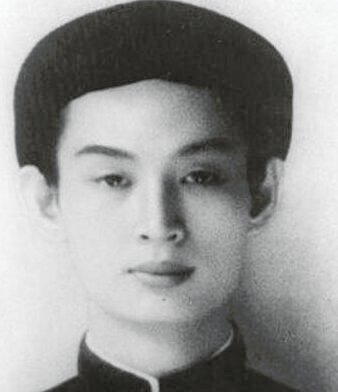
« Back to Glossary IndexEmperor Wu established over 70 temples throughout the country, so that the people would have places to worship and venerate. When Bodhidharma came from India to China to spread the Dharma, he visited and discussed Buddhist teachings with Emperor Wu. Because the Emperor focused too much on outward forms, he did not grasp the profound meaning in the teachings of the Bodhidharma, and began to doubt. Seeing this, the Bodhidharma bid farewell to the Emperor and went to Shaolin Temple to meditate facing a wall, composing a repentance sutra titled “Liang Huang Sam,” which is still recited today.
The reason Emperor Wu, despite being a king and a devout Buddhist, died a tragic starvation was due to deep karmic connections from a previous life…
The previous incarnation of Emperor Wu was a woodcutter who often went into the forest to chop firewood in exchange for rice. One day, the woodcutter came across a solitary Buddha statue standing outdoors, exposed to the sun and rain. Moved by compassion, he took off his straw hat and placed it on the statue. Thanks to the merit of this sincere offering, in his next life he was blessed with the fortune of becoming a king and wholeheartedly worshipped and served the Three Jewels (Buddha, Dharma, and Sangha).
In that same life as a woodcutter, he would often go to the forest to chop firewood, carrying a packet of rice which he would leave on a rock to eat when he was hungry. But twice, after finishing chopping wood and returning home, his packet of rice had “vanished without a trace.” He was very angry and had to go home hungry.
For the third time, he decided to find out why his rice packet had been lost twice. As usual, this time he left the rice packet on a rock and pretended to leave with his axe, but he hid in a nearby bush to watch. After a while, he saw a large monkey come and run away with the rice packet. He jumped out and chased after it, determined to strike the monkey with his axe to vent his anger. The monkey panicked, but because it was clutching the rice packet, it couldn’t climb a tree. Desperate, it saw a nearby cave and immediately crawled inside. The woodcutter pried up rocks and sealed the cave entrance. The monkey, trapped inside, ate all the rice but couldn’t get out, so it starved to death.
Because of this karma, when Emperor Liang Wu became king, that monkey was reborn as Hou Jian, who grew up to be the Emperor’s advisor. Later, Hou Jian harbored ambitions to usurp the throne, so he planned to lure the Emperor to Taicheng, then surrounded the city with his troops, forbidding anyone from bringing food to the Emperor. Thus, Emperor Wu had to starve to death in Taicheng, to atone for the evil deeds he had committed in the past.
(Commentary on the 1975 collection of Oracles )
« Back to Glossary Index