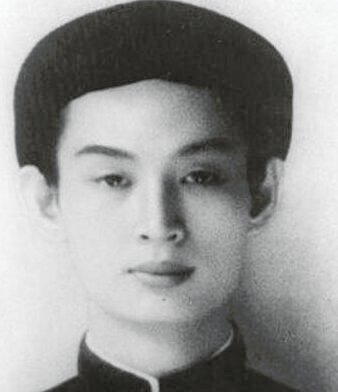
Contrary to the method of cultivation that the Master advocated, namely following the non-action (wu wei) practice of the Buddha Shakyamuni in the past, which was later propagated by the Sixth Patriarch Huineng, there was a famous monk during the Tang dynasty, Shenxiu, who advocated using sounds and forms of bells and gongs to encourage practice. Therefore, the Master called on the people to awaken and return to the root of the Way.
According to Shenxiu’s way of making many bells and gongs,
How many have ever truly succeeded since ancient times?
In the past, Shenxiu devised heretical and deluding methods,
And guided the common people of the Tang dynasty.
Seeing sentient beings lost and pitiable,
The realm of the Underworld does not take bribes.
Because there are now monks and nuns in temples who practice following forms and sounds, thus distorting the true transmission of Buddhism from the past, the Master advised them to quickly return to the True Dharma of non-action: “Profound and subtle is the mysterious Dharma, its fragrance never ending; Ah, the True Way of non-action, O people!” (For Mr. Tham Ta Nga).
Only in this way can one truly follow the authentic lineage of Buddha Shakyamuni and achieve results on the path of Buddhist practice. Because all forms and colors are illusions, mere appearances. Practicing Buddhism by clinging to forms (the conditioned) is like trying to catch a shadow in a mirror or grasp the moon reflected in water. The Chan (Zen) scriptures have stated: “If one practices seeking external forms, even after many lifetimes, one will ultimately not succeed. If one awakens and returns to see one’s own nature, then in a single thought, one attains the Bodhi fruit. Therefore, the practitioner must seek the true emptiness (true mind) to have real existence.” The Dharma Master always taught:
“Exalted matters of the Buddha’s teaching are vast,
Hard to encounter, emptiness yet existent.”
THANH TÚ: (606-707) In Buddhist history, there are no clear biographical records, only general knowledge: Thanh Tú was a disciple of Master Hoang Nhan, served as a teaching instructor, overseeing the monks’ studies; everyone respected his extensive learning.
When he composed verses for the Fifth Patriarch, he always felt a proud excitement, believing that no one among the monks could match him. However, after not being given the robe and bowl, he became resentful toward the Sixth Patriarch Huệ Năng and established a Buddhist sect spreading in northern China, serving as abbot at Ngoc Tuyen Temple in Jingzhou. Thanh Tú had about 3,000 students. Both teacher and students advocated gradual practice, gradually expressing sounds and forms: striking gongs and wooden fish, chanting sutras, offering tea and rice cakes… which distorted the core teachings of Buddhism.
Among the disciples, there were those who wanted to honor him as the Sixth Patriarch, but since the Sixth Patriarch Huệ Năng had already received the robe and bowl, everyone believed and obeyed. Therefore, several times the disciples of Thần Tú plotted to assassinate the Sixth Patriarch, but their schemes failed. From then on, the Northern and Southern sects gradually became estranged.
Annotation of Sám Giảng (1975).
« Back to Glossary Index