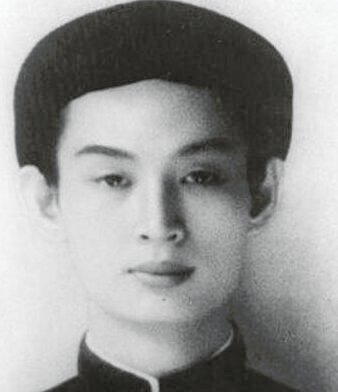
SHUN: is Emperor Shun (2256-2195 BC). His clan name was Yao, and his real name was Chong Hua. He was the eighth-generation grandson of Emperor Huang. He was a filial son, ranking first in the “Twenty-four Filial Exemplars” of China.
His biological mother died early. His father, Gusou, married another woman, who gave birth to Xiang. (People saw that he listened to his stepmother and intended to kill Shun, unable to discern right from wrong, so they called him Gusou, meaning ‘blind person’). Shun was falsely accused by his stepmother and his rebellious younger brother Xiang, so Gusou disliked Shun and intended to kill him. Yet Shun always remained filial to his father and harmonious with his brother.
Gu sou sent Shun to the Lishi Mountain to plow fields. This place was known for having many wild animals, so his father wanted the beasts to eat him out of sight. But when he arrived, the heavens sent elephants to plow and birds to gather grass. Seeing that they could not harm him, his father sent him to fish at Leizhe Pond, a place often troubled by large waves and strong winds, but when he arrived, the waves were calm and the wind gentle.
Emperor Yao, hearing of his great filial piety, summoned him to marry his daughter to him and passed on the throne. Emperor Shun established his capital at Do Ban (Ngu Huong, Ha Dong, Shanxi province) and changed the country’s name to You Yu.
Upon ascending the throne, Emperor Shun relied on virtuous and talented people to help govern the country. He sent Gon’s son, Wu, to control the floods in place of his father; appointed Mr. Tiet as Minister of Works, Mr. Hau Tac to teach the people to cultivate five kinds of rice; Mr. Cao Dam served as Minister of Justice… Emperor Shun also instituted inspections to review officials and the condition of the people. He established the Chang Tuong school. China had schools since the time of Emperor Shun.
During his 61-year reign, Emperor Shun merely played the zither and sang the Nam Phong songs while the world was at peace and all the people lived securely and prosperously. Later, seeing that his son, Shang Jun, lacked talent, Emperor Shun passed the throne to Mr. Wu, founding the Xia dynasty. Emperor Shun went on an inspection tour to the south and passed away in the land of Shang Ngo. He reigned for 61 years and lived to 101 years old.
Yao is Emperor (2357-2256 BC). Originally, he was the son of Emperor Coc, of the Y Ki family, named Phong Huan. When Emperor Chi, the descendant of the indulgent Emperor Hoang, was weak, the feudal lords jointly elevated Phong Huan to the throne, establishing the capital at Binh Duong (now part of Lin Fen, Ha Dong, Shanxi province), and named the country Dao Duong. The king focused on governance, ruling the people with benevolence.
During the reign of the first Hung King, in the country of Van Lang (present-day Vietnam), they captured a three-legged Divine Turtle, whose back had the inscription ‘Khoa Dau’, recording events from the creation of heaven and earth until then. King Hung immediately sent envoys to present it to King Nghieu. (The National History Epic has the line: ‘The Divine Turtle presents it to Dao Duong, and from then north and south interact with each other first’). King Nghieu ordered Mr. Hy Hoa to base the calendar on this to let the people know the seasonal times for farming. In this calendar, people used the waxing and waning of the moon to divide the months and seasons, so it was called the lunar calendar. The first days of the year were called Tet Nguyen Dan, and the term for the three days of spring originates from then. This calendar calculated 12 months each year (360 days), with every 3 or 4 years having a leap year consists of 13 months for adjustment. Those who make calendars afterwards all follow that. The people who lived during King Yao’s time were very happy; houses did not need doors, money falling on the street was not picked up by anyone… The whole country was peaceful and secure, so the nation’s foundation was strong and enduring. Although King Yao had up to 11 children, 9 boys and 2 girls, the king found that none of them had enough talent and virtue to succeed him. Therefore, when he heard about Shun, who was a model of filial piety, he immediately summoned him to marry his daughter and pass on the throne. King Yao ruled for 101 years.
Gusou:A figure from ancient Chinese mythology.
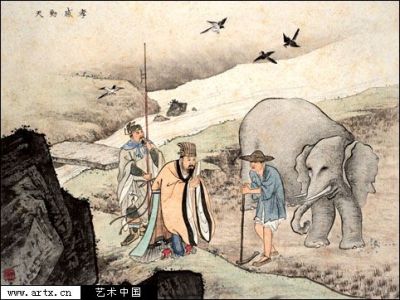
Gusou (gǔ sǒu), of the Gui surname and Youyu clan, was a figure in ancient Chinese mythology. He was a seventh-generation descendant of the Yellow Emperor and the father of Shun . He was given the name “Gu” (meaning blind) because he was blind. After his wife died, he remarried and had Xiang and Keshou. He repeatedly conspired with his second wife and Xiang to harm Shun.
Accounts of Gusou’s deeds are primarily found in the * Records of the Historian *. It is recorded that he ordered Shun to repair a granary and then set it on fire while Shun was inside. Later, he ordered Shun to dig a well and then filled it with earth to bury him, but Shun escaped both times. Shun served his parents with filial piety. Even after ascending to the throne as emperor, he continued to pay his respects to them respectfully, eventually moving all three to remorse. Legend has it that before Shun was born, Gusou dreamed of a Four-Eye Bird entering his embrace. The bird reappeared at the time of Shun’s birth, which was considered the origin of Shun’s double-pupil anomaly. His family background is associated with the allusion “Father Stubborn, Mother Insidious, Brother Arrogant,” making him a negative archetype in traditional filial piety culture. A line drawing of his image is preserved on a stone coffin from the Northern Wei period in *The Picture of Filial Sons*. Some scholars have questioned whether “Gu” might have been a title for a music official rather than indicating actual blindness. He was portrayed by Li Qishan in the 2013 television series * Da Shun.
Extract from Notes on the Oracles (1975)
« Back to Glossary Index