
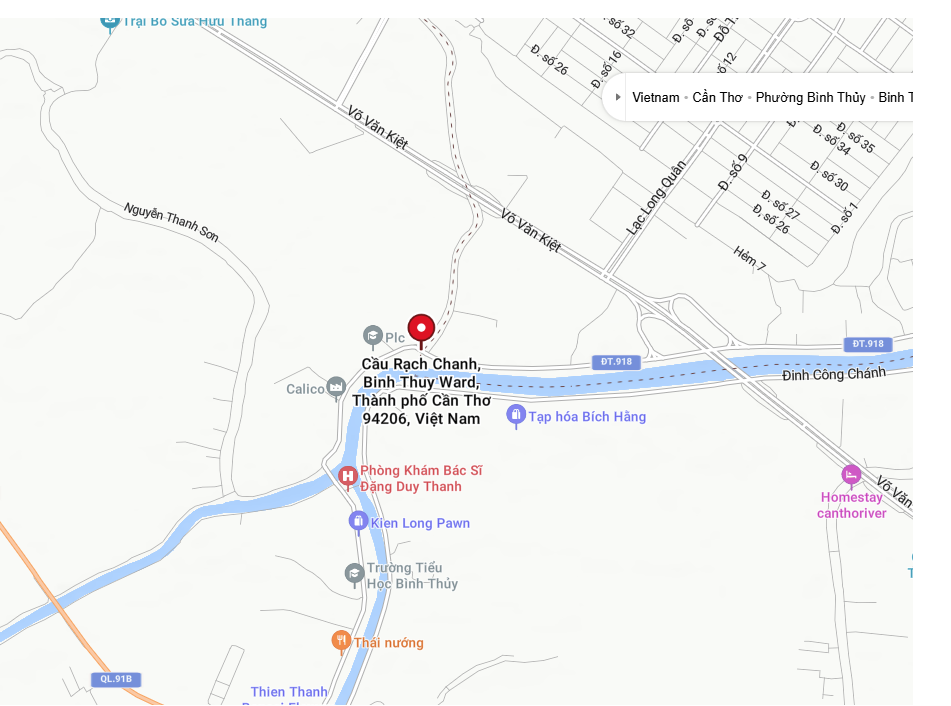
Rạch-Chanh
Qua khỏi Rạch Chanh, Đức Thầy thấy xã Kiến Vàng cũng kề cận, nên Ngài cho thuyền đi nhanhtới đó. Nơi đây nhà dân thưa thớt, nhưng điểm đáng quí là có nhiều người chơn thật tu hành, gặp kẻtàn tật ăn xin, họ chẳng dám khinh chê, lại còn ra tay giúp đỡ. Khỏi...
Rach Chanh
After passing Rạch Chanh, the Master saw that Kiến Vàng village was also nearby, so He had the boat go quickly there. Here, houses were sparse, but what was valuable was that there were many sincere people practicing, and when encountering disabled beggars, they did not dare to despise them, and even helped them. From...
Rạch-Ni Liên-Thuyền
Cũng viết là Ni Liên Thiền (Phạn ngữ: Nairânjânâ), Tàu dịch là Bất lạc trước hà, có nghĩa: con sông chẳng đắm nhiễm dục lạc. Vốn là một con sông nằm gần núi Tượng Đầu, xóm Ưu-Lâu-Tần-Loa, thuộc nước Ma-Kiệt-Đà (Ấn Độ). Trước khi tịnh tọa dưới cội Bồ Đề, Đức Thích Ca có xuống...
ragged mat
Sitting sadly is a phrase often used in literature to begin a story with an emotional tone: “Sitting sadly, I remember my mother of old! My mouth chews rice, my tongue removes fish bones.” (Poet Nguyen Duy) The whole sentence means that a sad situation suddenly encounters good fortune. Here, it means that the people,...
recital
Persistently reciting. Keeping the phrase in your heart, regardless of time, space, or "... walk, stand, lie down, sit, and chant, don't forget not to wait for the moment" (Buddha Chanting).
recompense
To conclude the book “Sermons Advising People to Practice Meditation,” the Supreme Teacher lets everyone know that the teachings herein have enough miraculous power to help sentient beings advance to a splendid glory. Because He has clearly outlined the path of meditation practice, whoever diligently follows it will surely achieve their wishes.
recruiter Bazin
The assassination of Alfred François Bazin (French: [bazɛ̃]), a French labour recruiter in Hanoi, colonial Vietnam on February 9, 1929 marked the beginning of the demise of the Vietnamese Nationalist Party (VNQDĐ), which perpetrated the killing. The resulting French retribution severely weakened the fledgling Vietnamese revolutionary movement and hampered its ability to undermine colonial rule. Biography The first account of the affair is Paul...
Red Exhibit
The red exhibit above the Three Jewels altar symbolizes the compassionate spirit of the Buddha. This was when the Master first founded the religion, but after eight months, he changed it to a dark brown color. Regarding the meaning and reason for the change, he clearly stated in a passage: “Previously, we worshipped the red...
Regardless of who suffers
"Trối" means not protecting or helping; "Kệ" means letting someone else bear the bitterness alone. The general meaning is to be unable to protect or help someone, leaving them to face hardships and suffering.
Ren Gui
Xue Rengui (Suringi) (simplified Chinese: 薛仁贵; traditional Chinese: 薛仁貴; pinyin: Xuē Rénguì; Wade–Giles: Hsüeh1 Jen2-kuei4; 614[1] – 24 March 683[2]), formal name Xue Li (薛禮) but went by the courtesy name of Rengui, was a Chinese military general during the early Tang dynasty. He is one of the most well-known military generals of his time due to his humble background, outstanding command abilities, strength and valour in battle. During his career,...